Dental Implants in Oak Ridge
At a Glance
- Service: Dental implants, from single tooth to All-on-4 and All-on-6 full arch
- Serving: Oak Ridge, Jackson Square, Solway, and the Pellissippi corridor
- Office hours: Mon to Wed 8 AM to 5 PM, Thu 10 AM to 7 PM, Fri 8 AM to 2 PM
- New patients: Yes, currently accepting
- Key differentiator: Digital imaging and guided planning, with placement and restoration in one office


Placement Day: The Surgical Appointment, Demystified
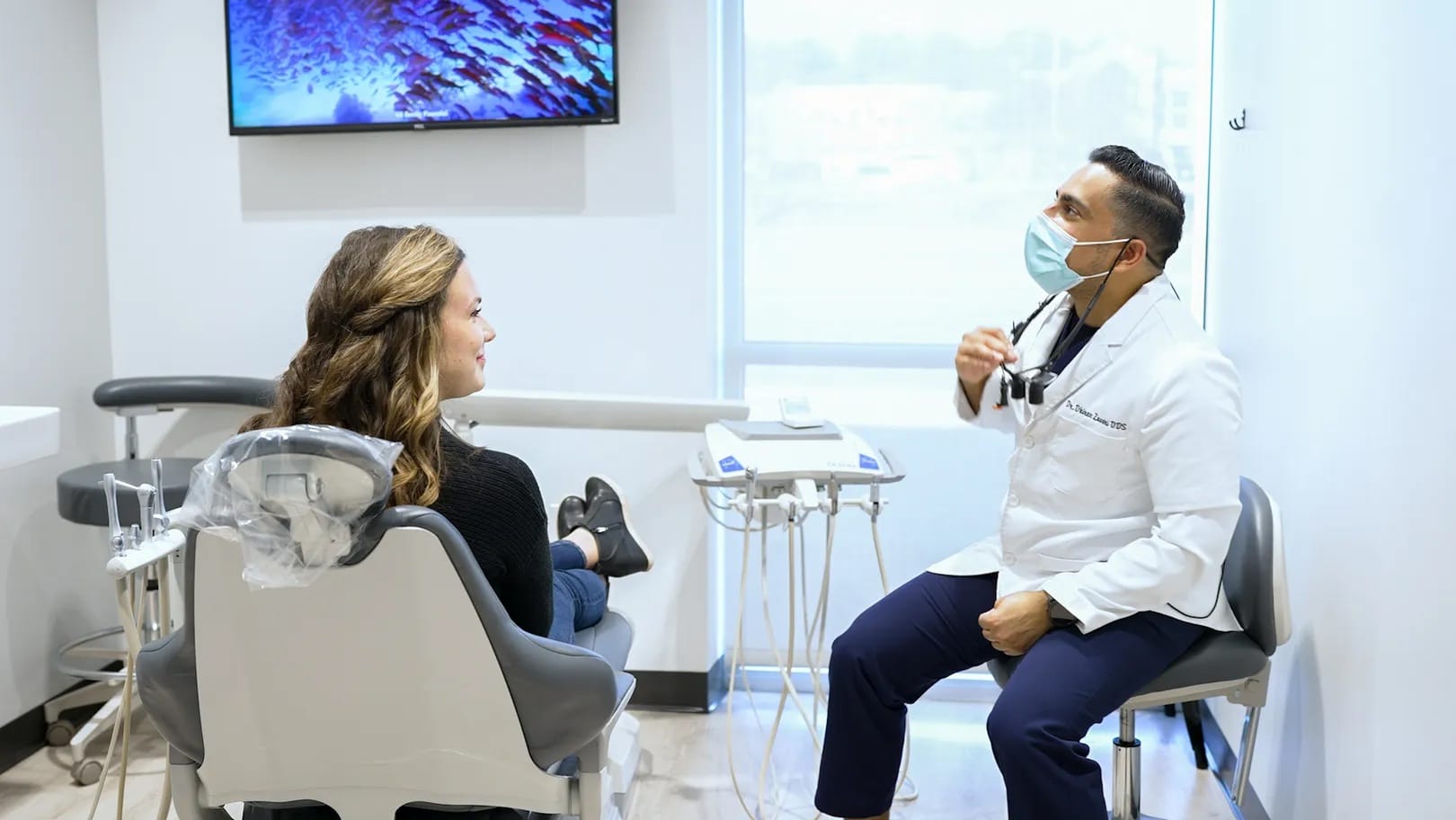
Placement is quieter than most Oak Ridge patients expect. The site is numbed thoroughly, a small channel is prepared in the bone, and the titanium post is seated to a planned torque. A single implant typically takes under an hour of chair time. Patients who want deeper relaxation can add dental sedation, arranged in advance with a driver for the trip back down the Turnpike. Multiple implants or a full arch extend the appointment, and the plan you approved tells you the expected chair time to the quarter hour.
Discomfort afterward usually peaks within the first two days and responds to over-the-counter medication for most patients. Swelling is modest when placement follows a precise plan, because precise placement disturbs less tissue. You leave with written aftercare instructions and a scheduled follow-up, and most patients return to desk work within a day or two.
Osseointegration: The Months That Make It Permanent
Here is the part that separates implants from every other tooth replacement: your bone grows onto the titanium surface and locks the post in place, a process called osseointegration. It takes roughly three to six months, and it cannot be rushed, because biology sets the schedule. During this window you live normally, often with a temporary tooth in the visible zone, while the foundation cures beneath the gum like concrete you cannot see.
This root-level integration is also why implants protect the jaw itself. A tooth root stimulates bone every time you chew. Remove the root and the bone begins resorbing, which is the slow facial collapse long-term denture wearers know well. An implant restores that stimulation, so the bone around it stays. No bridge and no conventional denture can make that claim, and for patients comparing options on the long horizon, it is the single most important line on the spec sheet.
The Restoration: Crown, Bridge, or Full Arch
Once integration is verified, the visible teeth go on. A single implant carries a custom crown matched to its neighbors. Several implants can carry a bridge without grinding down healthy adjacent teeth, which is the quiet cost of a conventional bridge. For a full arch, All-on-4 and All-on-6 place four to six implants around the arch, two angled at the back for stability, and attach a complete set of fixed teeth. Implant-supported dentures use a connecting bar for a removable prosthesis with firm anchorage, while implant-retained dentures snap onto ball fixtures and lift out for cleaning.
Every restoration is planned, placed, and finalized in the same Kingston Pike office. No referral loop between a surgeon in one building and a restorative dentist in another, and no version-control problems between two offices that never compare notes.
Who Qualifies for Dental Implants
Most adults with a missing or failing tooth qualify, and the exam verifies the rest. Good candidates have adequate bone at the site, healthy gums, and general health that supports normal healing. Thin bone does not end the conversation; grafting can rebuild a site, and angled full-arch techniques often work around deficits that would have disqualified patients a generation ago.
Honest exclusions exist. Uncontrolled diabetes, heavy smoking, and certain medications slow bone healing and lower success rates, so those conversations happen before surgery, never after a failure. Active gum disease gets treated first, because implants placed into infection fail early. Published success rates for dental implants run above ninety-five percent, and patient selection is a large reason why. We keep it that way by saying no when no is the correct answer, and by telling you what would have to change, quitting smoking, stabilizing blood sugar, finishing gum therapy, for the answer to become yes.
Aftercare: Maintaining the System
An integrated implant asks for ordinary maintenance, which is part of its appeal to people who appreciate low-overhead systems. Brush twice daily, floss around the implant the way you would a natural tooth, and keep your hygiene visits so calibrated instruments can clean where home tools cannot. The one scheduled inspection that matters most is the annual bite check, because an implant has no periodontal ligament to cushion heavy contact, and an unbalanced bite loads the crown like a bolt torqued past spec. A two-minute adjustment prevents that quietly.
Watch for the two early warning signals worth a phone call: gum tissue around the implant that bleeds or swells, and any sense of movement in the restoration. Both are usually small problems caught early and expensive ones ignored. Oak Ridge patients, trained by careers of preventive maintenance schedules, tend to be our best implant owners, and their implants reward them with decades of uneventful service, which is the most desirable performance curve a medical device can have.
Your Drive From Oak Ridge
From Jackson Square, follow Oak Ridge Turnpike east to the Pellissippi Parkway interchange and take Pellissippi south past Solway and Hardin Valley to the I-40/I-75 junction. Merge onto I-40 West for one exit, leave at Exit 373 for Campbell Station Road, turn left, then right onto Kingston Pike heading west. The office sits at 11840 Kingston Pike, Suite A, about half a mile past Farragut Town Hall, with free parking at the door. Plan on thirty minutes door to door.
A Dentist Who Speaks Fluent Technology

Dr. Dhiren Zaveri, DDS, approaches implant dentistry the way Oak Ridge approaches everything: measure first, then build. His Doctorate comes from the Oklahoma College of Dentistry, his implant planning leans on digital imaging and current guided techniques, and he refreshes that toolkit at several professional conferences each year rather than coasting on what worked a decade ago. Patients from the ORNL and Y-12 workforce tend to arrive with researched questions, and he welcomes them, because a patient who understands the mechanism makes better decisions and heals with more confidence.
Office Tour
Our Dental Services Include:
Dental Implants Provider
Frequently Asked Questions: Dental Implants in Oak Ridge
How long does the full implant process take from first scan to final crown?
A: A straightforward single implant typically runs four to seven months: planning, placement, three to six months of osseointegration, then the crown. Cases needing grafting add healing time up front. You get a written timeline at the consultation, specific to your scan.
Do you use 3D imaging to plan implant placement?
A: Yes. Digital imaging maps bone volume, nerve position, and sinus anatomy before placement day, and the implant position is planned from that data. Precision at this stage is what keeps surgery short and recovery mild.
Can I drive myself back to Oak Ridge after implant surgery?
A: With local anesthetic alone, yes, most patients drive home normally. If you choose dental sedation, you need a driver both ways, so arrange that before the Pellissippi trip rather than the morning of surgery.
Will my employer dental plan from ORNL or Y-12 help pay for implants?
A: Many PPO plans now contribute toward implant crowns, and some cover part of the surgical fee. We are in-network with most PPO plans and verify your implant benefit line by line before treatment, so the estimate reflects your actual coverage.
What are implants made of, and can my body reject them?
A: The posts are medical-grade titanium, the same biocompatible metal used in orthopedic implants. True rejection is extremely rare; the failures that do occur usually trace to infection or impaired healing, which is exactly what candidacy screening exists to prevent.
New Patient Specials
New Patient Special
$249
No insurance? We offer a $249 Comprehensive New Patient Exam, X-Rays, Healthy Mouth Cleaning, and an Oral Cancer Screening.
Emergency Exam
$109
In pain? We offer a $109 Limited Exam and X-Rays for emergency patients. New patients only. Cannot be combined with insurance.
CHILDREN'S New Patient Special (12 and Under)
$109
No insurance? We offer a $109 CHILDREN'S New Patient Exam, X-Rays, Healthy Mouth Cleaning*, and a Fluoride Treatment.
Dental Membership Plans
Child Membership
12 and Younger
$28/mo
$49 Lifetime Activation Fee
Includes:
- Professional dental cleanings (2/year)
- Doctor exams (1-2/year)
- Needed x-rays*
- One emergency exam per year (if needed)
- One fluoride treatment
- 15% off other treatments
(some exclusions may apply)
Save $127 per year
Adult Membership
13 and older
$29/mo
$49 Lifetime Activation Fee
Includes:
- Professional dental cleanings (2/year)
- Doctor exams (1-2/year)
- Needed x-rays*
- One emergency exam per year (if needed)
- One fluoride treatment
- 15% off other treatments
(some exclusions may apply)
Save $232.20 per year
Perio Membership
Periodontal Disease
$59/mo
$49 Lifetime Activation Fee
Includes:
- Perio maintenance cleanings (3-4/year)
- Doctor exams (1-2/year)
- Needed x-rays*
- One emergency exam per year (if needed)
- One fluoride treatment
- 15% off other treatments
(some exclusions may apply)
Save $147 per year
Our Knoxville - Farragut Dental Practice Location

Office Hours:
Monday - Wednesday: 8:00 AM - 5:00 PM
Thursday: 10:00 AM - 7:00 PM
Friday: 8:00 AM - 2:00 PM
Saturday: Closed
Sunday: Closed